Rebuilding After Betrayal
Sometimes Your Awakening Begins When Everything Falls Apart
A story of marriage, betrayal, heartbreak, survival and discovering what remains.
This article is for general education and reflection. It is not therapy, diagnosis, medical treatment, personalised professional advice or crisis care, and it does not guarantee healing or a particular outcome. It was published on 7 August 2026.
Find professional support if you are in crisisThere was a time when I thought I knew exactly what my life was going to look like.
I was married for over a decade.
When you spend that many years with someone, marriage becomes more than a relationship. It becomes part of the structure of your life.
You build routines together. You make plans. You create memories. You imagine what the next five, ten or twenty years might look like.
After enough time, there isn't simply you and them anymore.
There is an us.
And whether you realise it or not, parts of your identity can become connected to that us.
Mine did.
So when I experienced infidelity within my marriage, I wasn't simply dealing with the actions of another person.
I was dealing with everything those actions made me question.
How long had this been happening?
What else didn't I know?
Which moments had been genuine?
How could someone who knew me so intimately also hurt me so deeply?
And then came one of the most dangerous questions:
What was wrong with me?
That is what betrayal can do.
Someone else makes a decision, but somehow you end up putting yourself on trial.
When More Than a Marriage Ends
Divorce after more than a decade of marriage isn't simply the end of a relationship.
It can feel like the end of an entire version of your life.
I wasn't only grieving a marriage.
I was grieving history.
I was grieving expectations.
I was grieving the future I thought I was going to have.
I was grieving the version of myself that existed within that relationship.
And while I was trying to make sense of all of that, life didn't suddenly become gentle.
There were other betrayals.
Other disappointments.
Other situations that changed the way I looked at people, trust and life itself.
There were periods of suffering that went far beyond heartbreak. There were circumstances where my safety was threatened and experiences that forced me to confront how fragile life can be.
Sometimes it wasn't one event that broke me down.
It was the accumulation.
One thing happened.
Then another.
Then another.
You survive one experience and barely have time to understand what it did to you before you're facing something else.
Eventually, you can become tired in a way that sleep cannot fix.
I know that kind of tired.
Betrayal Changed the Way I Saw People
Betrayal does something to you.
At first, you think you're simply angry with the person who betrayed you.
But if you don't deal with the wound, eventually it starts following you.
You analyse people differently.
You question motives.
You listen for what isn't being said.
You notice inconsistencies.
You become guarded.
You tell yourself you're simply being careful.
And sometimes you are.
Experience can make you wiser.
But I also had to recognise something uncomfortable:
Sometimes pain can disguise itself as discernment.
There is a difference between recognising a pattern because you have developed wisdom and assuming everybody is dangerous because somebody once hurt you.
I had to learn that difference.
Because surviving betrayal can teach you to protect yourself.
But if protection becomes your entire way of living, eventually you build walls so high that even genuine people cannot reach you.
I began to understand that what happened to me and what was now happening inside me were two separate things.
I couldn't control the decisions other people had made.
But eventually, I had to decide what those decisions were going to turn me into.
I Was Angry Too
I don't want to tell my story in a way that makes it sound as though everything happened and I immediately became enlightened.
I didn't.
There was pain.
There was anger.
There were questions.
There were moments when I replayed situations in my mind.
There were moments when I wondered what I could have done differently.
There were times when I tried to understand how somebody could say they loved you while making choices capable of destroying your trust.
That contradiction is difficult to process.
And when betrayal happens more than once, in different forms and through different people, it becomes very easy to develop a new philosophy:
Don't trust anybody.
Don't become vulnerable.
Don't expect too much.
Don't let people too close.
Protect yourself.
Those beliefs can make you feel powerful for a while.
They can even make you feel safe.
But eventually I realised something.
If the people who hurt me were still determining how I loved, trusted, thought and lived years later, then they still had influence over my life.
I didn't want to give them that.
Eventually, the Question Changed
When you're suffering, one of the first questions you ask is:
Why me?
Why did this happen?
Why did this person betray me?
Why did my marriage have to end this way?
Why did I give so much to people who were capable of hurting me?
Why did I have to experience so much?
I don't think there's anything wrong with asking those questions.
Sometimes you need to.
But eventually, my question changed.
Instead of only asking:
"Why did this happen to me?"
I started asking:
"What is this revealing to me?"
That question took me somewhere completely different.
Because now I wasn't only looking at everybody else.
I had to look at myself.
My patterns.
My attachments.
My expectations.
My anger.
My beliefs.
The things I tolerated.
The things I ignored.
The places where I may have abandoned myself while trying to preserve something else.
And the parts of me that still needed healing.
That doesn't mean taking responsibility for somebody else's betrayal.
Their decisions belong to them.
But I had to take responsibility for what happened next.
That belonged to me.
Forgiveness Wasn't What I Thought It Was
Forgiveness became part of my journey.
And forgiveness sounds beautiful until you actually have someone to forgive.
It's easy to tell somebody else to let go when the wound isn't yours.
It's different when you've lived through the consequences.
I had to understand that forgiveness didn't mean pretending nothing happened.
It didn't mean saying betrayal was acceptable.
It didn't mean removing accountability.
It didn't mean allowing somebody unlimited access to my life.
It didn't mean forgetting the lessons.
And forgiveness didn't necessarily mean returning a relationship to what it had been before.
I began to understand forgiveness differently.
For me, forgiveness meant:
I refuse to build the rest of my life around what you did to me.
That distinction mattered.
Because you can forgive someone and still establish boundaries.
You can release resentment and remember the lesson.
You can care about somebody and recognise that they can no longer occupy the same position in your life.
Sometimes forgiveness isn't even primarily about releasing the other person.
Sometimes forgiveness is about releasing yourself.
Then I Had to Forgive Myself
This was harder.
Because after betrayal, you don't always remain angry only with the person who hurt you.
Sometimes you become angry with yourself.
How didn't I see it?
Why did I trust them?
Why did I stay?
Why didn't I recognise what was happening?
Why didn't I have stronger boundaries?
Why did I allow certain things?
But eventually I realised something.
I was judging an earlier version of myself using information that version of me didn't have.
I was expecting the man I was then to possess the wisdom of the man I became afterwards.
That's an impossible standard.
Some of the things I understood after suffering were things I learned because I had suffered.
I couldn't go backwards and give that wisdom to the man I used to be.
But I could stop punishing him for not having it.
I could learn from him without hating him.
I could acknowledge mistakes without allowing shame to become my identity.
And I could move differently because now I knew differently.
Then I Began to Understand The Remnant
After the divorce.
After heartbreak.
After betrayal.
After disappointment.
After experiences that challenged the way I understood people and life.
Something was still there.
Me.
Not exactly the same version of me.
Not untouched.
Not without scars.
But still here.
And that is where the idea of The Remnant becomes deeply personal.
A remnant is what remains.
When something has been stripped away, something remains.
When a marriage ends, something remains.
When somebody betrays you, something remains.
When the future you planned disappears, something remains.
When life brings you to a place you never imagined you would have to survive...
Something remains.
And eventually I realised that perhaps the question wasn't:
"How do I get my old life back?"
Maybe I wasn't supposed to become the old version of myself again.
Maybe the better question was:
"What am I going to build with what remains?"
This Is Where My Awakening Began
I wish I could tell you awakening always begins peacefully.
Mine didn't.
Some of my greatest questions were born from some of my deepest pain.
Suffering forced me to examine what I believed about people.
About relationships.
About love.
About forgiveness.
About myself.
About consciousness.
About purpose.
About the way our thoughts and emotions influence the lives we create.
And about what happens when we stop moving through life unconsciously and begin examining the patterns underneath our decisions.
I started searching.
Thinking.
Questioning.
Writing.
Learning.
Looking inward.
And slowly, experiences that once felt like disconnected pieces of suffering began forming part of a much bigger journey.
That journey would eventually influence the ideas I explored in The Great Awakening: Age of Aquarius and become part of the philosophy behind The Remnant.
Not because I have all the answers.
I don't.
But I have lived through enough questions to understand how powerful it can be to finally start asking them.
Maybe Your Life Has Fallen Apart Too
Maybe you found this article because you're going through heartbreak.
Maybe you're facing divorce.
Maybe somebody cheated on you.
Maybe somebody you trusted betrayed you.
Maybe your suffering has nothing to do with marriage or relationships at all.
Maybe you've lost something.
Maybe you've survived something.
Maybe you're exhausted from being the strong person.
Or maybe so much has happened that you no longer recognise yourself.
You wake up and think:
This isn't the life I thought I was going to have.
I know that feeling.
I'm not going to tell you to just be positive.
I'm not going to tell you that your pain doesn't matter.
I'm not going to tell you that healing happens overnight.
And I'm certainly not going to tell you that you have to pretend what happened was okay.
But I will ask you a question that I eventually had to ask myself:
What remains?
When you remove the person who left, what remains?
When you remove the betrayal, what remains?
When you remove the marriage, the relationship, the title, the plans and the expectations...
Who is still there?
You are.
Start there.
Your Story Doesn't Have to End Where the Pain Began
Sometimes awakening doesn't arrive as a beautiful revelation.
Sometimes it arrives disguised as an ending.
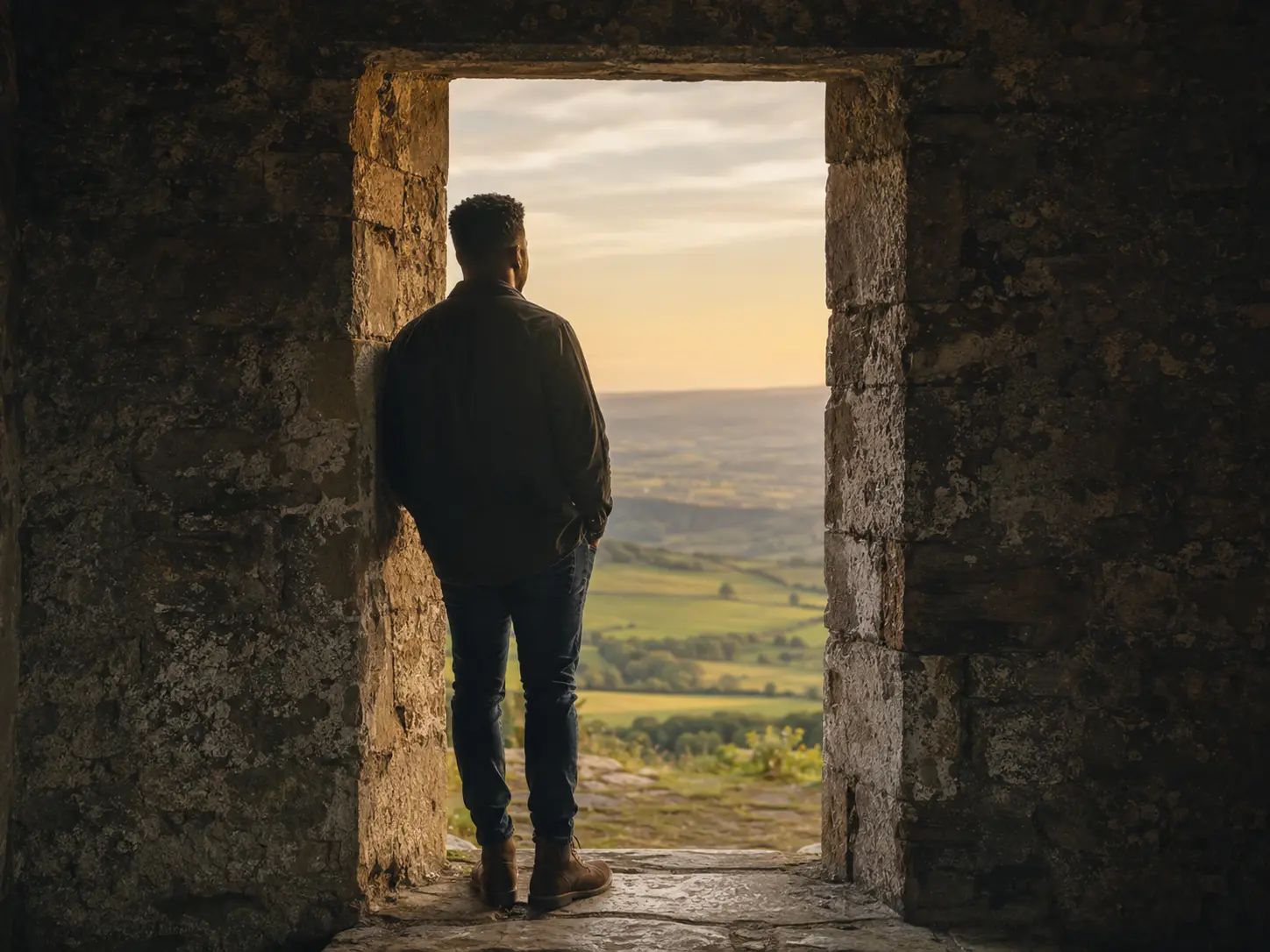
Sometimes everything becomes so quiet after your old life falls apart that, for the first time, you can finally hear yourself.
And sometimes the person you discover underneath all that pain becomes someone you would never have met if everything had remained exactly as it was.
I don't celebrate everything that happened to me.
There are things I would never have chosen.
But I refuse to waste what they taught me.
My story didn't end when my marriage ended.
It didn't end with infidelity.
It didn't end with betrayal.
It didn't end with heartbreak.
And it didn't end during some of the darkest periods of my life.
Something remained.
I remained.
And I decided to build from there.
That is what The Remnant means to me.
Not pretending you were never broken.
Not pretending you were never hurt.
Not pretending the past didn't happen.
But recognising that after everything you've survived, there is still something within you capable of rebuilding.
Your pain can be part of your story without becoming the author of your future.
The Remnant is what remains.
And what remains can still become something extraordinary.
The Remnant is a space for honest conversations about awakening, relationships, forgiveness, emotional healing, identity, purpose and what it means to rebuild after life's most difficult seasons.
This is only the beginning of my story.
The Remnant is what remains. And what remains can still become something extraordinary.
Pause and reflect
What remains when the life you expected falls apart?
You do not need to force an answer. Write down what comes to mind and return to it when you feel ready.